Capture One has released a minor update to Capture One 21, bringing it to version 14.0.2 which adds support for some new cameras as well as some other fixes. Full details …

Thomas is a professional fine art photographer and writer specialising in photography related instructional books as well as travel writing and street photography.
All in Capture One
Capture One has released a minor update to Capture One 21, bringing it to version 14.0.2 which adds support for some new cameras as well as some other fixes. Full details …
I must admit to only half following this news over the past few days, being somewhat preoccupied with real-world events. Anyway, the other day Capture One announced that they were putting the prices up for some versions of Capture One, notably the Nikon, Fujifilm and Sony versions. In addition, they are putting the number of seats with the Nikon/Sony/Fujifilm versions to two.
It’s been a little while now since Capture One 21 was released. The new version of Capture One has been accompanied by a bit of a backlash about the amount of new features. Putting that aside, for now, In this review, I wanted to focus on a couple of things, namely the headline features of Dehaze and Speed Edit, and I’ll discuss some of the other improvements too. I’ll also look at whether or not the criticism of this release is justified.
Capture One 21 has now officially been released by Capture One. The new version of the software, which is available now, contains some new features, and performance enhancements. I will have a full review soon, but for now, here is an overview of what’s new in the software
I know it's been a while since I've done any videos or tutorials, but with recent events it’s been difficult, and so I'm only getting back into it now. Anyway, I hope you find this useful. In this video, I show you how to do “Tonal Contrast” in Capture One
Capture One showed off another sneak peek of a new feature coming in Capture One 21. This time they showcased the new Dehaze tool coming in the next version of the software.
There’s been a few bits of photo software news over the past few days, so I’ve distilled them down into one quick post! Nik Software is celebrating its 25th anniversary, you can now get a free upgrade to Capture One 21 if you buy version 20, and Photoshop is already out in beta for Apple Silicon Macs.
If you’re curious as to what is new in the upcoming Capture One v21, the company is holding a sneak peek live stream tomorrow (Nov 17th) at 16:00 CET where they will showcase some of the new features.
Today, Capture One has announced that the next version of Capture One will be coming in the not too distant future, and they are accepting pre-orders for those who want to upgrade to Capture One 21.
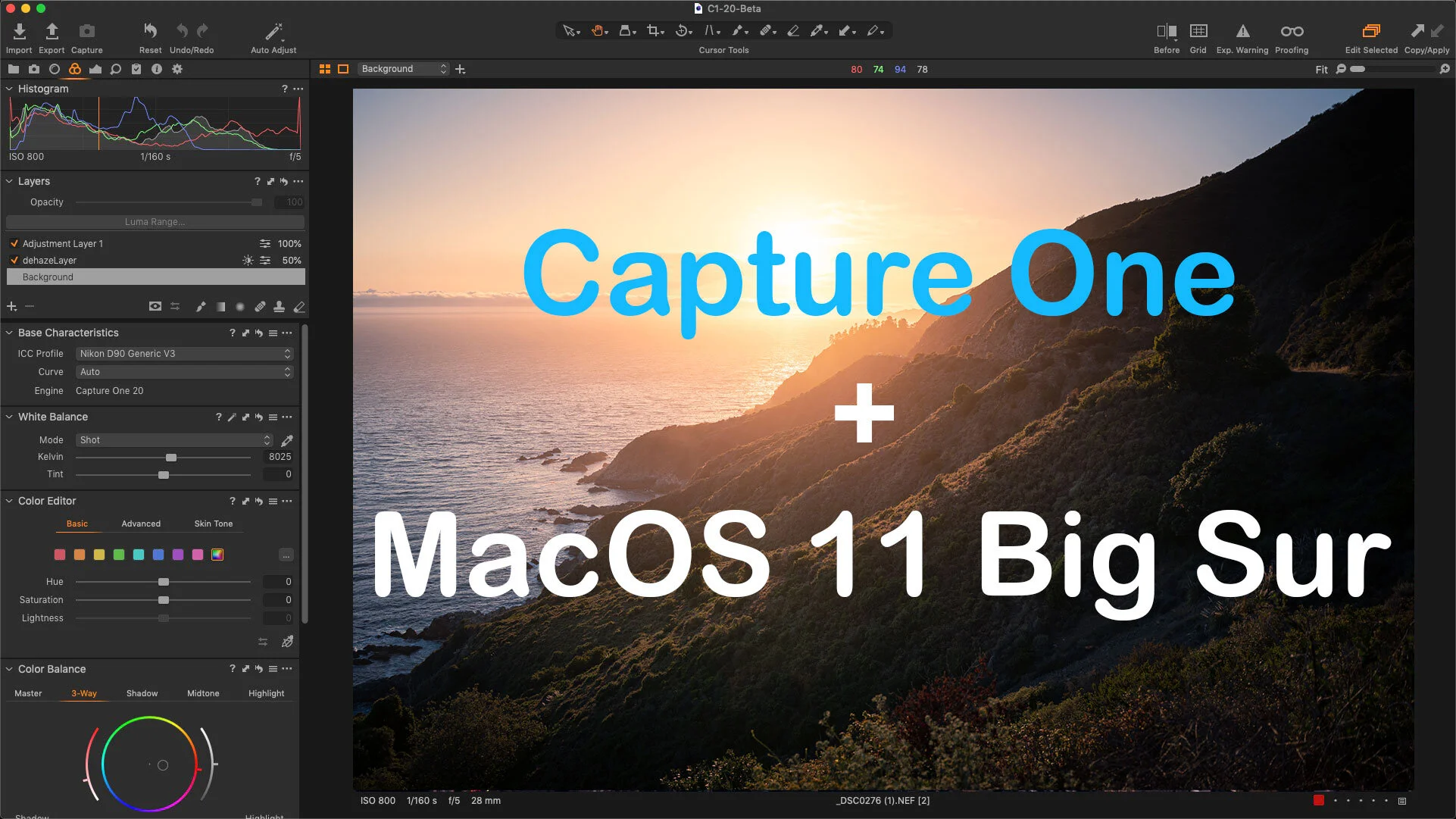
Capture One just released an important tech note that you should be aware of if you’re running the software on a Mac. The application does not currently support MacOS Big Sur. With the release of the next version of MacOS imminent, you should be aware of this before you upgrade, especially if you use Capture One in a work or production environment.
In addition to today’s earlier news of a new Capture One 25% off discount for prepaid subscriptions, there’s more Capture One news in the form of a service update. Version 13.1.3 contains new camera and lens support, as well as bug fixes. Full details below.
While it’s main summer offer has ended, Capture One is now offering another chance to get 25% off, but this time only for annual prepaid subscriptions. This offer does apply to all variations though, so Full Pro, Sony Pro, Fujifilm Pro and Nikon Pro.
A recent technology demonstration from Adobe showed off a new feature coming to Camera RAW and Lightroom: Colour Grading. The applications will get a three-way colour corrector similar to video editing applications, and a feature that has been present for some time in Capture One.
I do love a good film simulation. That’s what I said to myself when I got to try out the “Beyond Film” style pack from Capture One. It’s actually surprisingly hard to find, especially for Capture One. There are the Mastin Labs films which I covered before, but I find that they’re quite overpowering. I’ve tried in the past to make my own film simulations, and they were ok. The problem is that, at the end of the day, simulating film isn’t necessarily what you want to do. You want to capture the essence of film, but without the drawbacks. And having tried these “beyond film” styles now, that’s what I feel they achieve.
This video is a follow-up to the article I posted last week on the same topic. I had come up with a way to add haze using layers and a Luma mask in Capture One and I wanted to take it a bit further so I recorded a video showing you how to use the technique in a variety of situations.
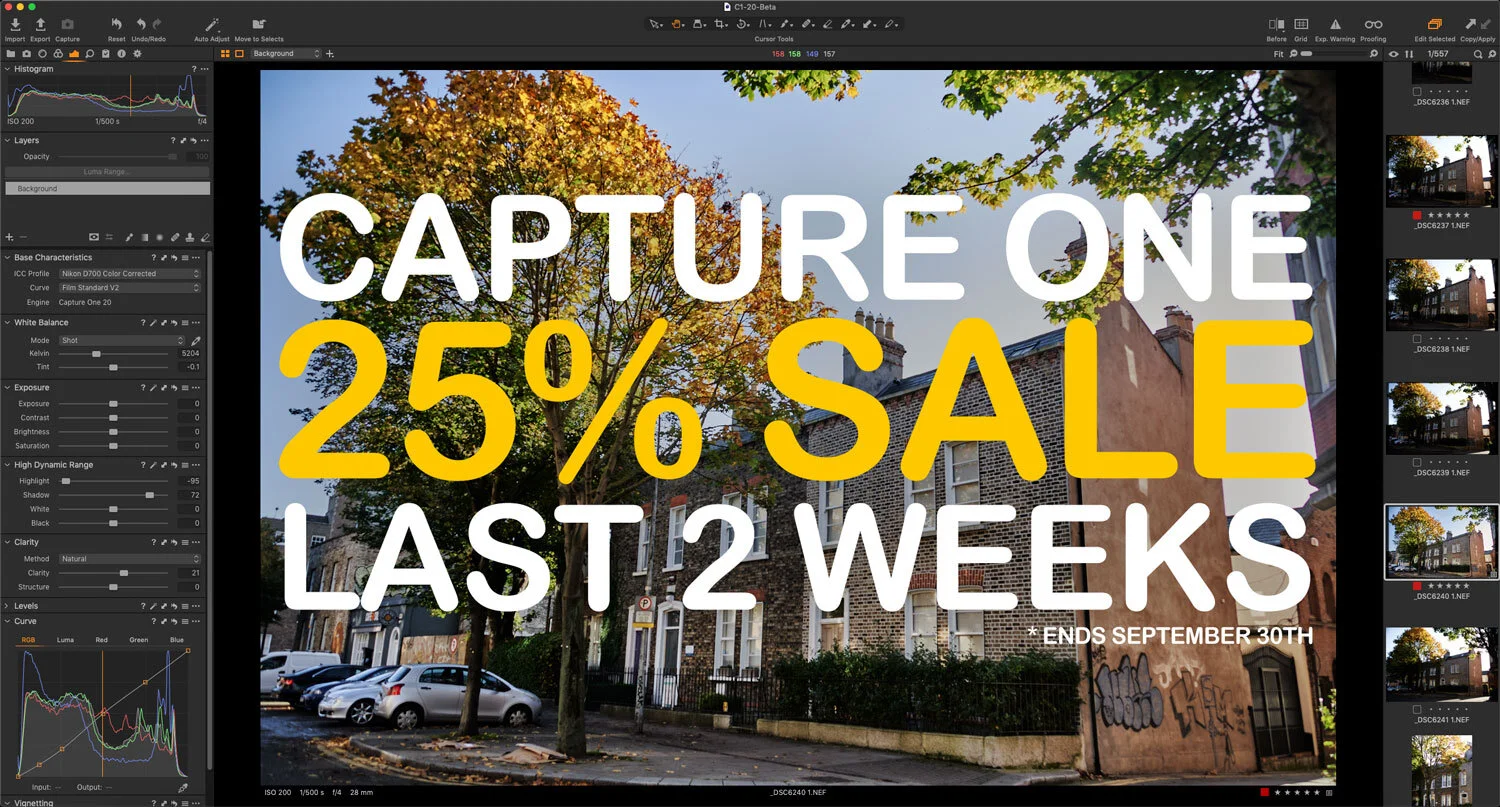
Just a quick reminder that Capture One is still running their summer sale. There’s still time to get a discount of up to 25% on all versions of Capture One by using the coupon code below. The sale ends September 30th.
As much as I like Capture One, I still recognise that like all software, there are plenty of things that could be improved. I'm not talking about the big stuff either, like HDR merging or Panorama stitching. There are a lot of smaller annoyances and features that I wish would be addressed or added. So here is a short selection of some of the things from my wish list. I've also included those that readers have sent into me over the past few months.
Ever since I posted my tutorial for achieving dehaze in capture One on YouTube, I’ve been getting lots of requests for a way to do the opposite. Adding haze to an image is a lot tricker than dehaze if you want to make it look realistic. To add fog or atmosphere in an image, you really need to have a depth mask to do it properly. If I were doing this for visual effects, I’d first have to create some kind of depth map for the scene. However, if you’re happy with just an approximation, then you should be able to achieve something reasonable in Capture One.