
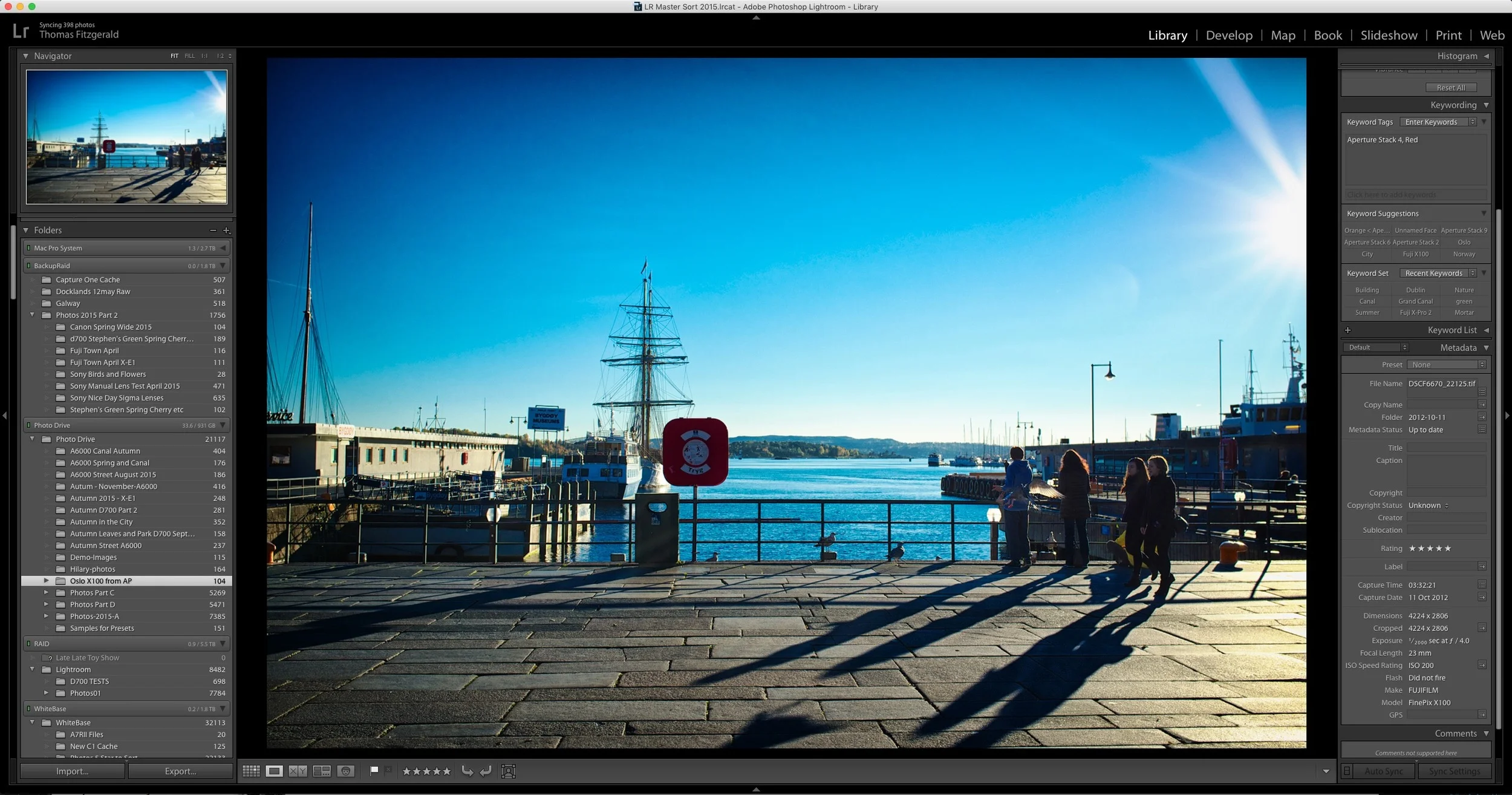
There are a lot of hidden and not so obvious features littered throughout Lightroom. I've previously expressed my dislike of the interface for dealing with metadata in the software, but it does have a few tricks up its sleeve. For example, if you start typing in any of the fields, it will auto fill in the entries based on previous results.
There's another useful thing you can do when entering metadata too. If you click on a field name, for example "Title", you will get a pop up list of the most recent entries for that filed. This is useful if you want to use the same data across more than one image, but you're not applying them to all images or in order. (so syncing wouldn't make sense)
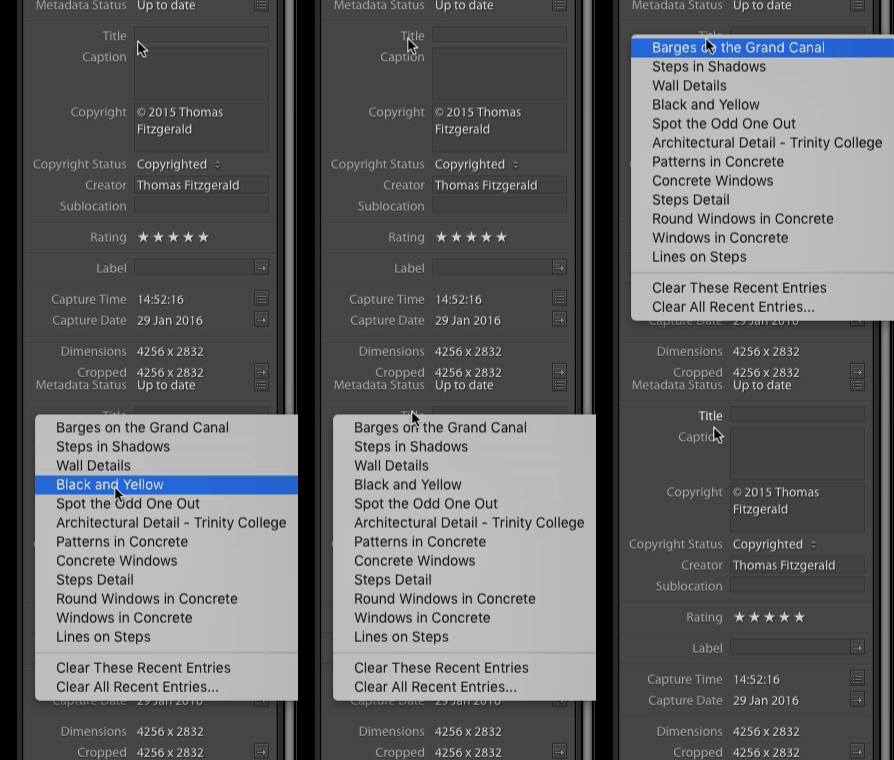
Note that this only works on certain fields, specifically those that you would normally enter text into, such as Title, Caption, Copyright, Copy Name and so on.
Help Support the Blog
If you want to get regular updates, and notices of occasional special offers, and discounts from my store, then please sign up for the Newsletter.
All of the work I do here, and the information on this blog is done entirely free of charge and takes up quite a bit of work. I want to spend more and more time on this blog, and offer more and more of this kind of information, tips and so on, so If you like what I'm doing here and want to show support, then you can do so by buying something from my Digital Download Store
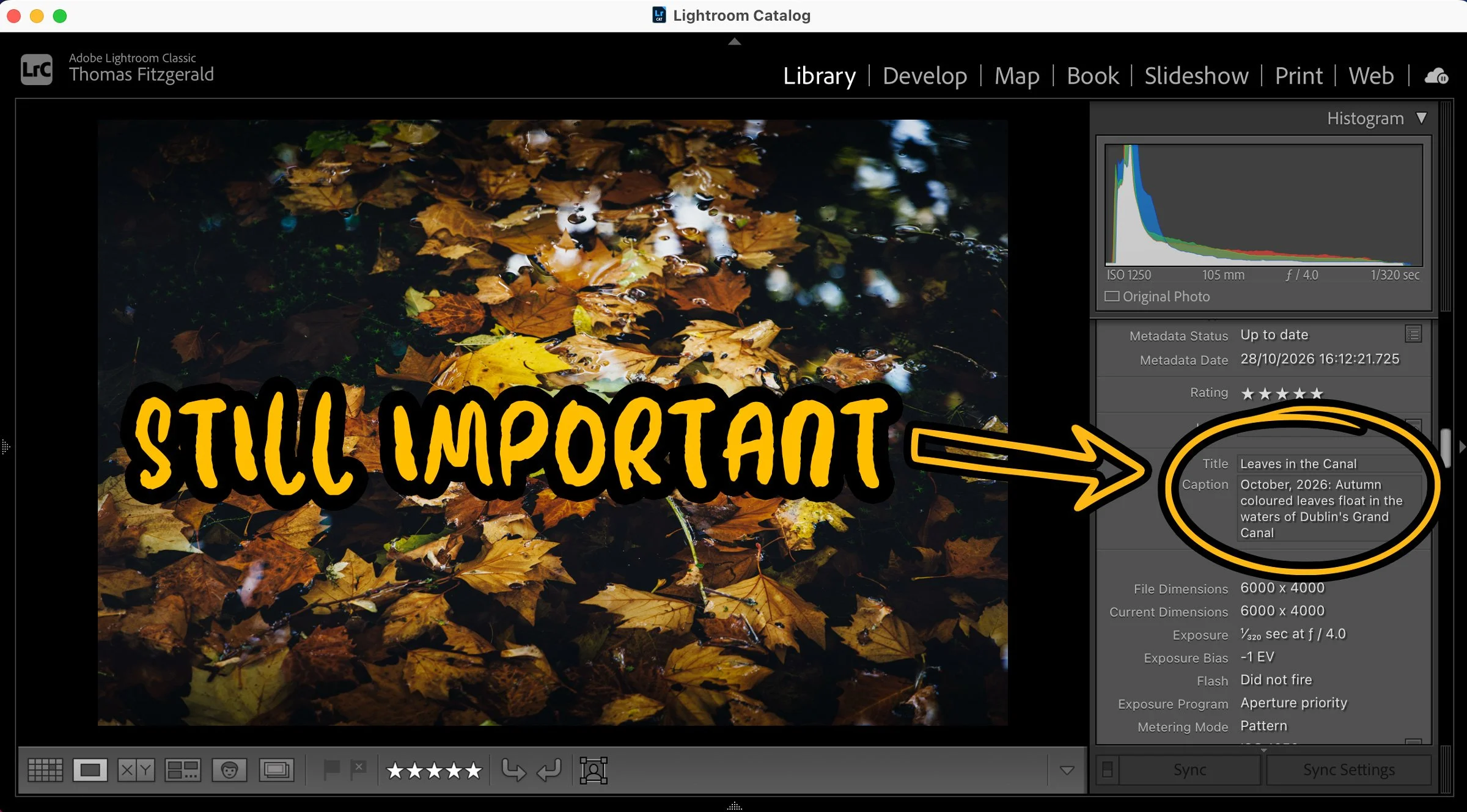
After my recent video on using Siri to add captions and keywords to photos, someone on social media asked a question that kind of took me aback: “What's the point?” I had assumed everyone who was in any way into photography understood the benefit of adding keywords and captions, but I guess not. The more I thought about it, the more it made sense in a way. Phones recognise faces. Most software (except Lightroom Classic, because…Adobe) can find "dog on a beach" without a single piece of user-generated metadata, and AI seems to know what's in every picture. So why bother writing anything by hand?

In this week’s photo software news….Lightroom’s latest mobile tools offer new ways to rescue photographs, while Topaz has released fixes that should interest Mac users. The controversial PhotoCraft also continues its development, although there are still good reasons to approach it cautiously.

Someone recently left a comment on one of my videos insisting that AI Denoise was just “slop” and that a denoised photo wasn’t a real image anymore. It made me realise that some people think AI denoising works the same way as generative AI, replacing their photo with something synthesised. It doesn’t. Tools like Lightroom’s Denoise use machine learning to clean up the pixels you actually captured, removing noise while keeping the real detail, whereas generative tools invent content that was never there. In this post, I explain the difference and why a denoised photo is still your photo, just cleaner.

In this video, I show you a cool way to use Siri AI in the new macOS 27 Golden Gate to create captions and keywords for use with Lightroom, Lightroom Classic or any photo editor, really. The trick involves using Apple’s “Visual Intelligence” feature to let Siri see what image you’re looking at, and then it can generate captions from there. I also show you how to use the new “Describe a Shortcut” feature to create a shortcut to do this quickly in one step.
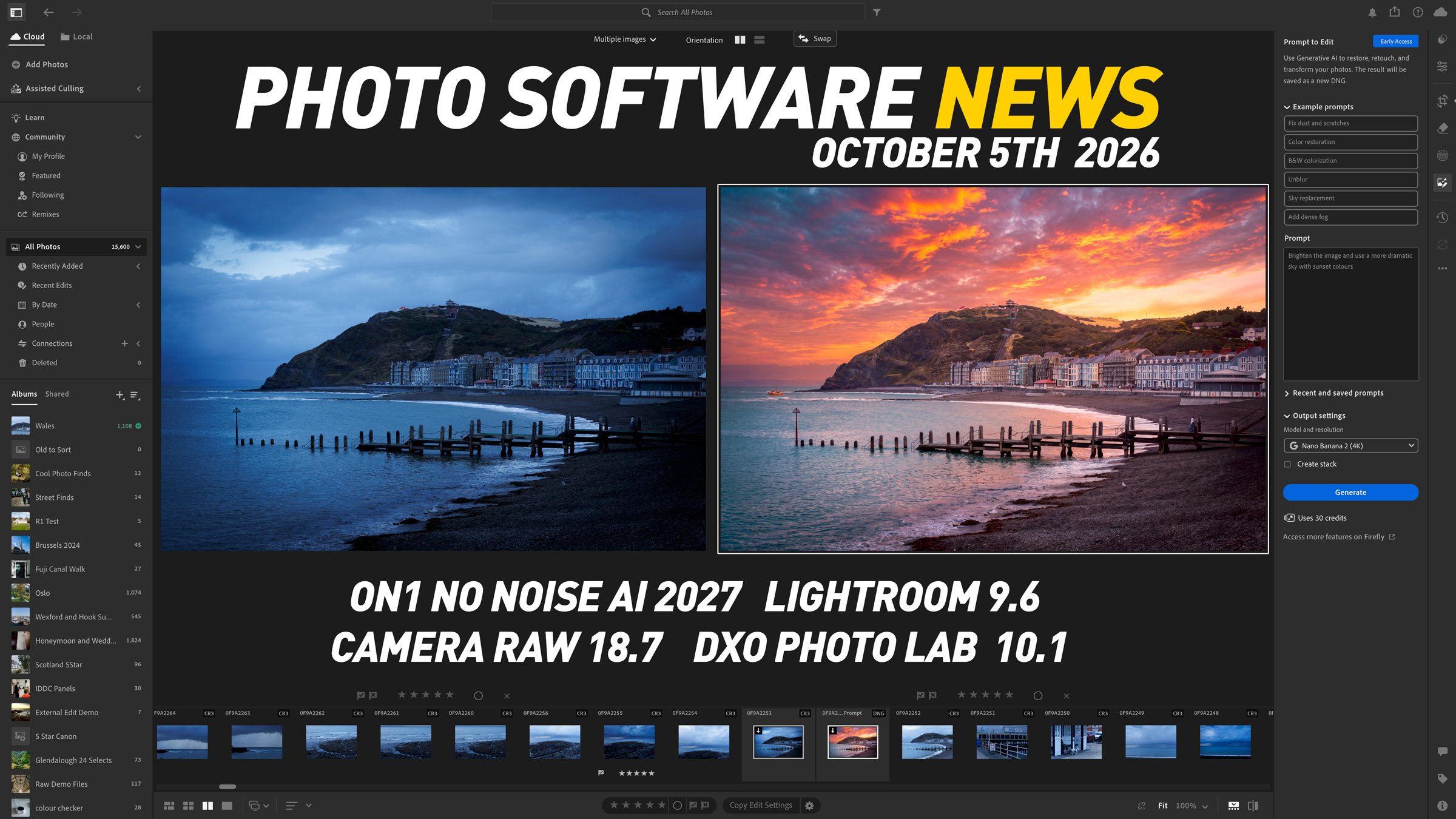
This edition (the first! of a new series - I hope) of “photo software news update” looks at Lightroom’s new Prompt to Edit feature, improved Reflection Removal, and the release of ON1 NoNoise AI 2027. There are also practical workflow improvements for Camera Raw and Photoshop users, plus native Affinity integration in DxO PhotoLab 10.1. Here is what has changed, which features are still in early access or beta, and what these updates could mean for your photography workflow.
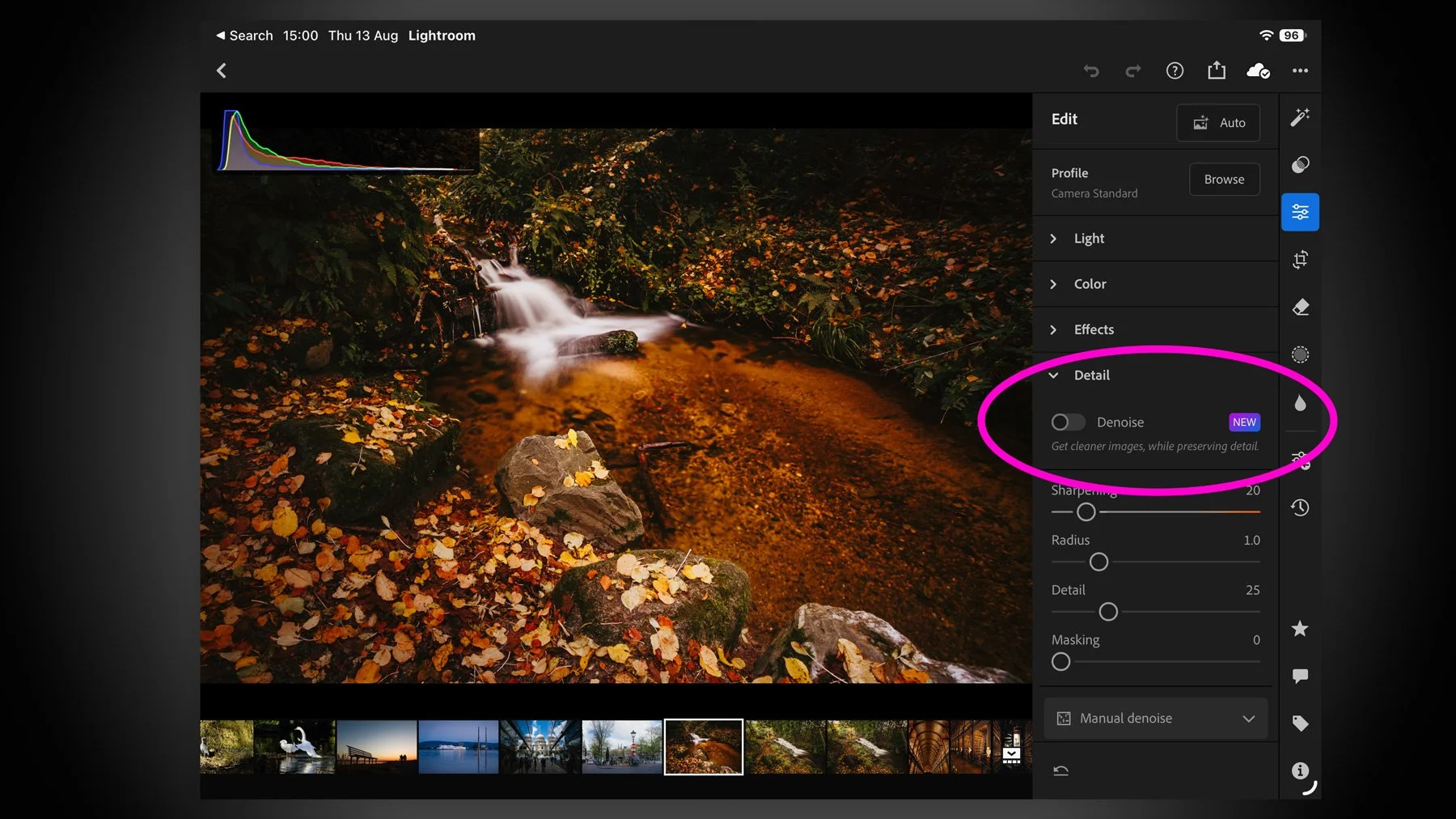
I missed this when the recent round of Adobe Photography updates dropped for August 2026, but they added a much-requested and long-missing feature for Lightroom on the iPad. There’s not much point in me teasing it, as it’s in the title, but yes, Lightroom on iPad finally gets Denoise. And it actually works pretty well.
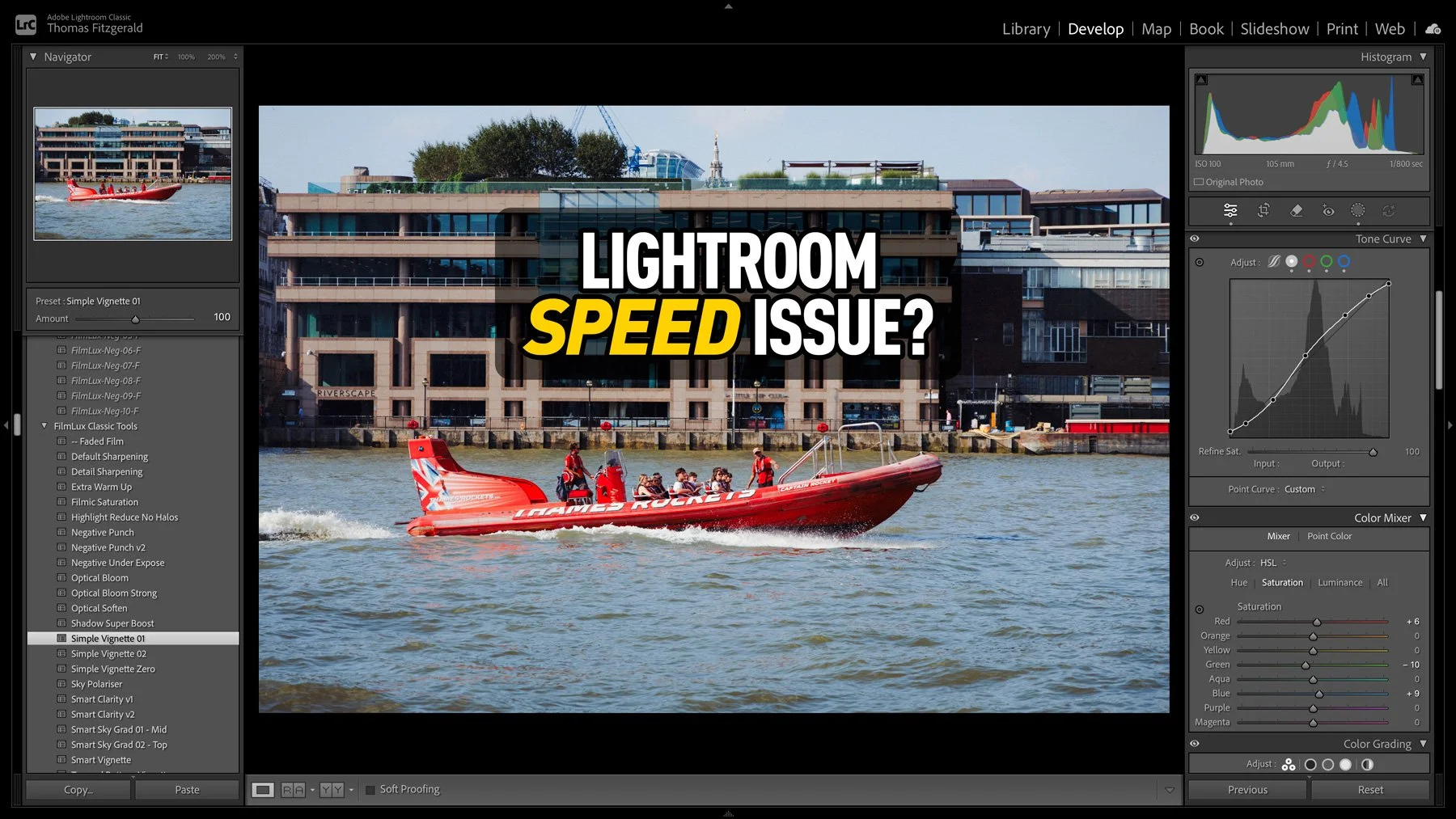
I had taken some photos over the weekend, and I was processing them in Lightroom when I noticed that the software was acting unusually. When I applied a preset, the preview worked perfectly, but it took a few seconds to actually apply. At first I thought that maybe this was an issue with the new version of Lightroom, so I quit and restarted. It was then that I noticed another weird issue: the software was still trying to write the metadata to disk. So I thought that maybe my disk was running out of space. I checked, and there was still lots of room. Curiouser and curiouser I thought. While it turned out not to be a disk space issue, I was actually close to the source of the problem, thinking it was disk-related.
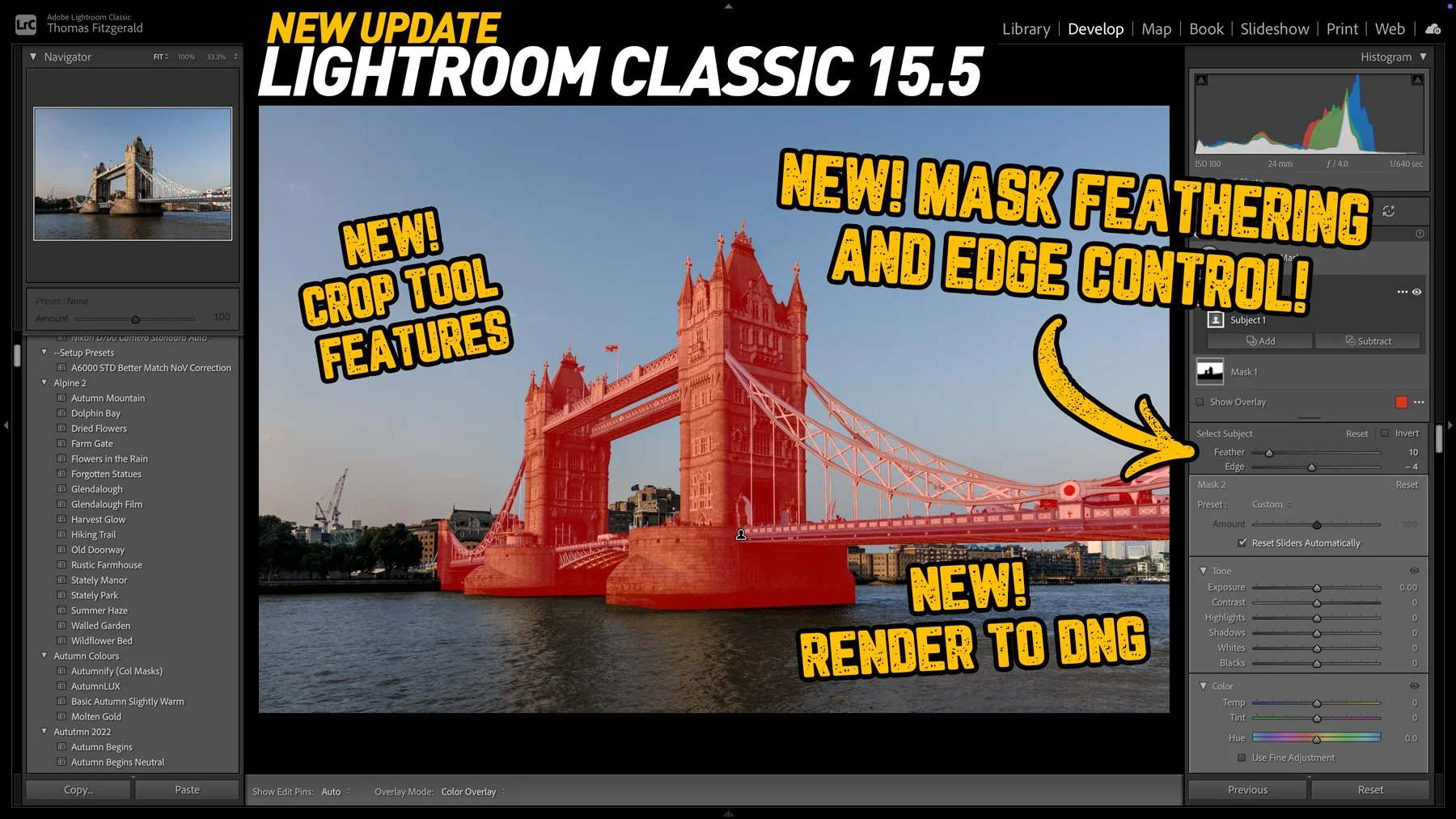
Adobe has released the latest round of Lightroom and Camera RAW updates, and in this article we’re going to concentrate on Lightroom Classic. Aside from the usual under-the-hood tweaks and bug fixes, Lightroom Classic 15.5 adds three new key features, one of which I’ve been asking for for a long time!
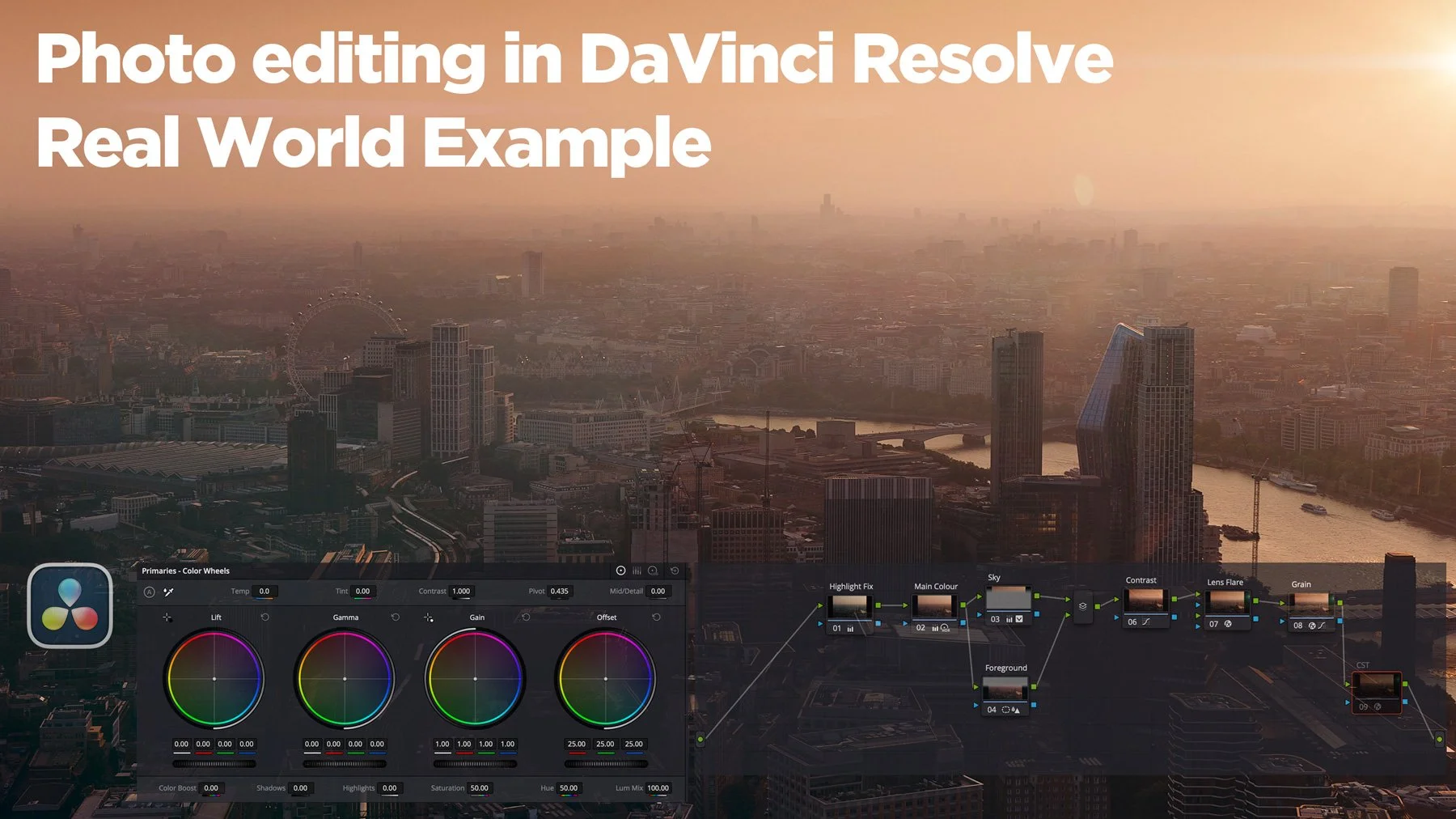
On a recent trip to London, I took quite a few photos and some video at the top of the Shard, one of London’s most famous buildings. I have already posted a few of these, and there are a lot more to come. However, in this post, I wanted to talk about the challenges I faced editing a subset of the images I took and how I addressed them. I ended up using both Lightroom and DaVinci Resolve’s new photo editing mode for these. The latter is something I particularly want to talk about, as it has some interesting abilities, as well as some quirks that those not familiar with the software should be aware of.
Adobe have just released the latest version of Lightroom: Lightroom Classic 16, and it’s a major new update with a ton of new features. These include a new Vectorscope tool, A Glow Effect, AI Depth masks and many more. I recorded a walkthrough video where I show you the new features and how to use them. There are also corresponding releases across Adobe’s photography lineup released today too, but for this post, I’m just concentrating on what is in the update to Lightroom Classic